Introduction
Have you ever felt a sudden, sharp “zing” while biting down on something crunchy? You visit the dentist, but they say, “Your X-ray looks perfectly fine.” This frustrating experience is a classic sign of Cracked Tooth Syndrome (CTS).
Unlike a cavity that shows up as a dark spot on a scan, a tooth crack is often a microscopic enemy. If left untreated, this “invisible” line can lead to a root canal or, worse, a tooth extraction. Today, we’ll explore how to identify a cracked tooth before it’s too late.
1. Sensitivity vs. Crack: How to Tell the Difference
Not all tooth pain is created equal. Knowing the difference can save your natural tooth.
| Symptom | Dentin Hypersensitivity (Sensitive Teeth) | Cracked Tooth Syndrome (CTS) |
| Trigger | Cold water, sweets, or brushing. | Pressure when biting or releasing a bite. |
| Location | Generalized area or near the gum line. | Isolated to one specific tooth. |
| Duration | Sharp but fades quickly after the stimulus. | Becomes more frequent and intense over time. |
| Cause | Receding gums or worn enamel. | Hard foods, ice chewing, or teeth grinding. |
Tip: If your symptoms align more with “Sensitive Teeth,” check out this detailed guide on Stop the Zap: An Endodontist’s Guide to Tooth Sensitivity to find the right solution for you.
2. The “Invisible” Problem: Why It Doesn’t Show on X-rays
Patients often ask, “Why can’t you see the crack on the screen?”
Standard 2D X-rays are excellent for detecting decay between teeth, but they struggle with cracks. Since a crack is a vertical or horizontal split thinner than a strand of hair, the X-ray beam must align perfectly with the crack to reveal it.
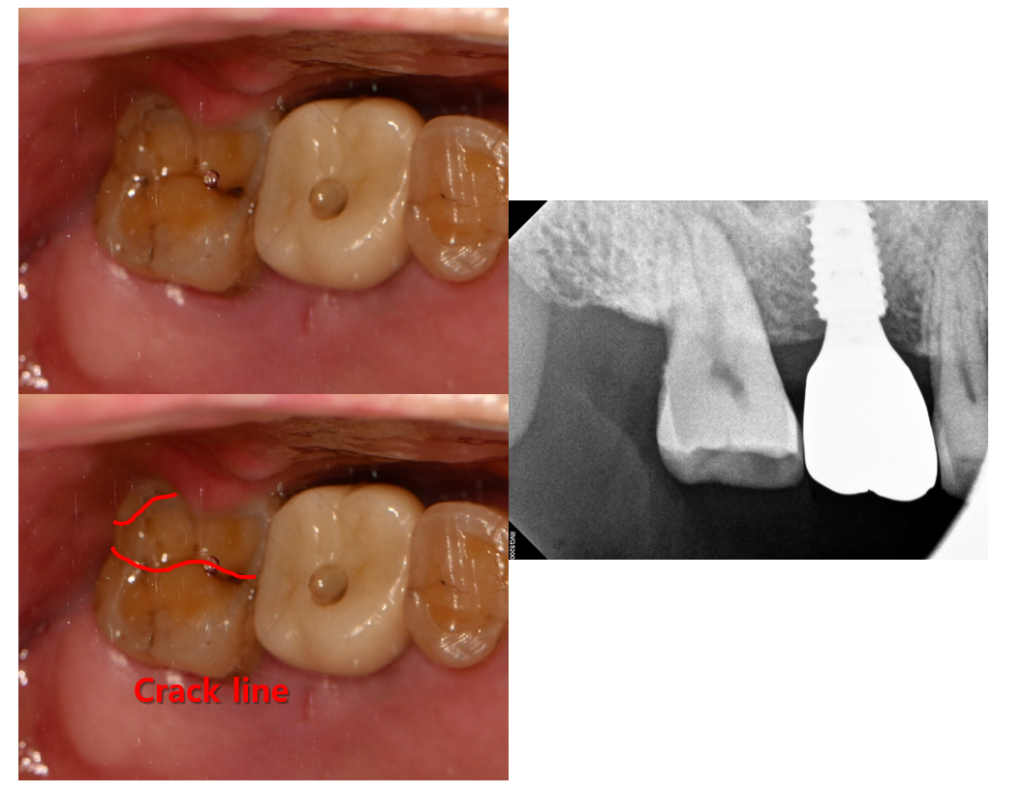
Figure 1. A crack line is observed in the clinical photograph but not on the X-ray
How Dentists “See” the Invisible:
- Bite Test: Using a specialized tool (like a Frasier or Bite Stick) to pinpoint which cusp is fractured.
- Transillumination: High-intensity light (like Q-ray) to reveal how light refracts at the fracture line.
- Methylene Blue Dye: Staining the tooth surface to make the crack visible to the naked eye.
3. The 4 Stages of a Cracked Tooth (The “Bamboo” Analogy)
Think of a tooth like a piece of bamboo. Once a split starts, it only goes deeper under pressure.
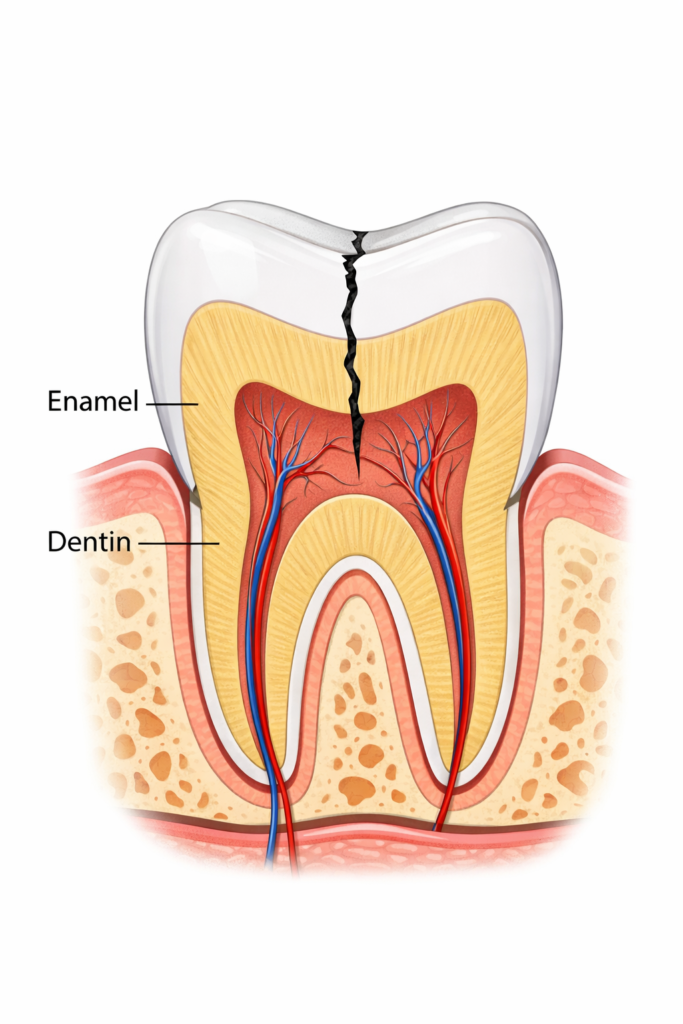
Stage 1: Craze Lines: These are tiny cracks in the outer enamel. They are mostly cosmetic and rarely need treatment.
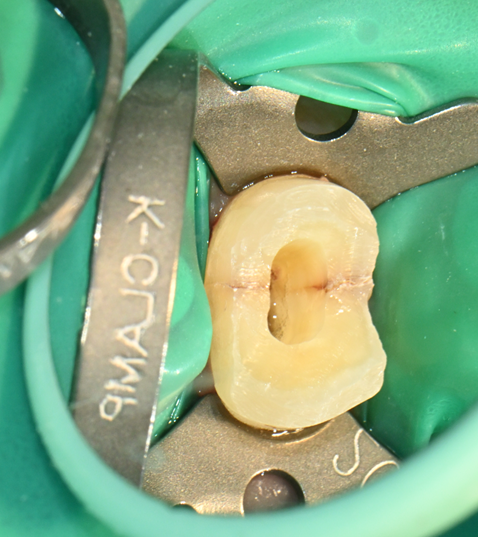
Stage 2: Fractured Cusp (The Golden Window): The crack reaches the dentin. This is when you feel that “sharp zing.” A Dental Crown is usually enough to “hug” the tooth together and stop the split.
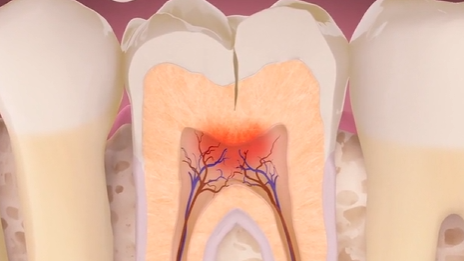
Source: AAE(https://www.aae.org/patients/dental-symptoms/cracked-teeth/)
In this case, the symptoms can disappear if the crack line is removed and a crown is restored.
Stage 3: Nerve Involvement: The crack reaches the pulp (nerve). Pain becomes constant. You will likely need a Root Canal followed by a crown.
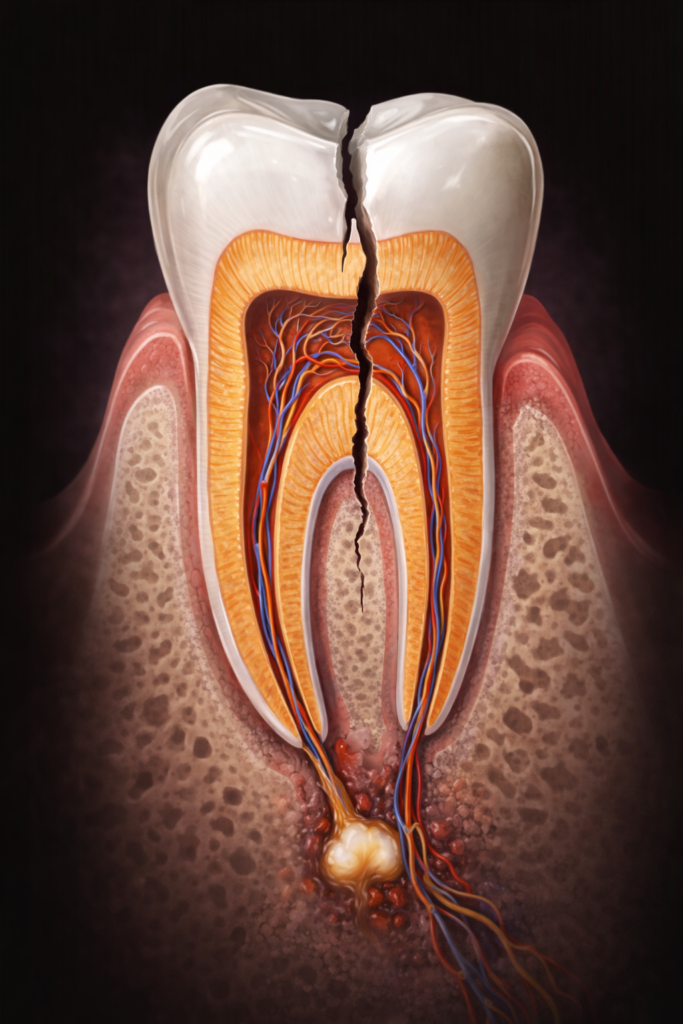
Stage 4: Vertical Root Fracture: The crack extends below the gum line to the root. Like a split bamboo, it cannot be glued back. Extraction and an Dental Implant are the only options left.
4. The Solution: Why a Crown is Like a “Helmet”
The most effective way to treat a cracked tooth is to prevent it from flexing. When you chew, the two sides of a crack move apart, irritating the nerve.
A Dental Crown (Zirconia or Gold) acts as a protective helmet. By encircling the entire tooth, it holds the pieces together and prevents the crack from spreading further. Early intervention with a crown is 100% better than a late-stage implant.
5. Preventative Habits for Longevity
- Stop Chewing Ice: It’s like hitting your teeth with a hammer.
- Watch Out for “Hidden” Hard Foods: Unpopped popcorn kernels and olive pits are top culprits.
- Manage Night Grinding (Bruxism): If you wake up with a sore jaw, ask your dentist about a Night Guard (Splint).
Conclusion
A cracked tooth is a race against time. “Waiting for it to get better” usually means waiting for it to break completely. If you experience pain only when chewing, don’t wait for the X-ray to show a problem—it might be too late by then.
Protect your smile today to avoid a costly surgery tomorrow.
References & Further Reading
To provide you with the most accurate and up-to-date dental information, this article references the following clinical guidelines and research:
- American Association of Endodontists (AAE) – Cracked Teeth Guide
- An official clinical guide used by dental professionals worldwide to classify and diagnose different types of tooth fractures.
- View Guide (External Link)
- National Center for Biotechnology Information (NCBI) – Cracked Tooth Syndrome: A Review
- A comprehensive peer-reviewed study discussing the etiology, diagnosis, and modern treatment protocols for CTS.
- Read Full Paper (PMC8694987)
- Journal of Endodontics – Diagnosis of Cracked Teeth
- Research focusing on the effectiveness of different diagnostic tools, such as transillumination and bite tests.
““Sharp Pain When Chewing? Why X-rays Might Miss This Silent Tooth Killer””에 대한 2개의 생각